



Why Is Italian Jewelry Considered the Finest in the World?
Throughout history, whenever luxury connoisseurs, collectors, master jewelers, or historians, talk about exceptional jewelry, one country consistently stands above the rest: Italy. Fine jewelry is produced all around the world, but Italy occupies a unique position of authority and excellence. The reputation of Italian jewelry is built not only on centuries of talent and skill but also on a culture where art, architecture, fashion, and design have shaped the standards of luxury for generations.
“When people refer to ‘Made in Italy,’ they usually reference the artisanship, the cultural legacy, and the high specialization that goes into the luxury products manufactured in our beautiful country,” says Maria Carola Picchiotti, Marketing Director of PICCHIOTTI and daughter of Giuseppe Picchiotti. “I think that jewelry holds a very special spot in the whole Italian luxury scene. It is the perfect combination of technical precision, artistry, passion, and emotion. Plus, when you add the boost of glamour and sophistication you get the very second you put on Italian jewelry… this is exactly why Italian jewelry is considered the most beautiful in the world!”
Jewelry made in Italy transcends ornamentation—it becomes wearable art. Here, we will explore how Italian jewelry has come to be considered the finest jewelry available in the global marketplace.
HERITAGE OF ARTISANSHIP
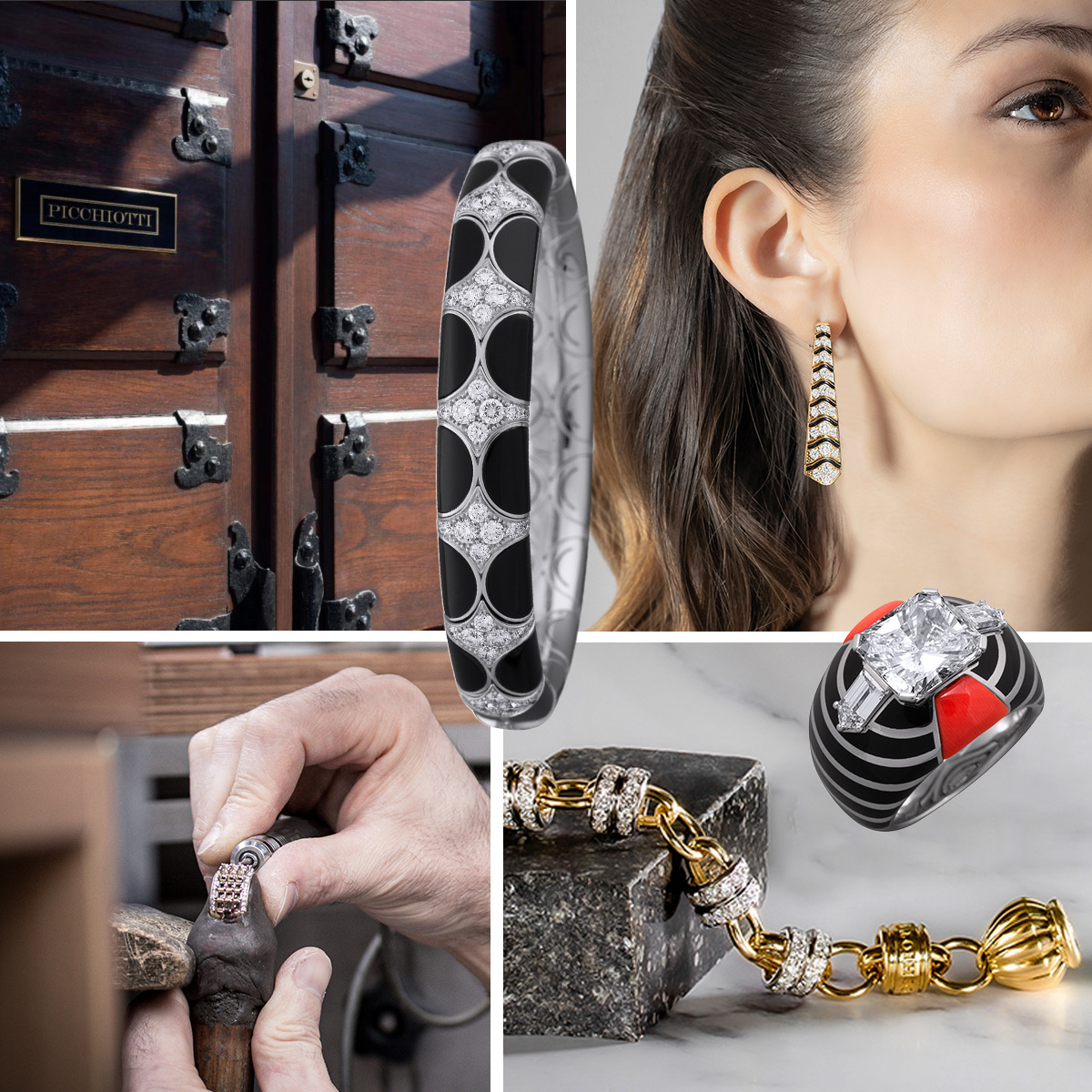
Clockwise from upper left – doors to the PICCHIOTTI Atelier in Valenza, Italy, PICCHIOTTI Xpandable Onyx and Diamond bracelet, model wearing PICCHIOTTI Art Deco earrings, PICCHIOTTI Art Deco inspired cocktail ring with coral, black gem ceramic, and white diamonds, PICCHIOTTI Easy Wear Gold and Diamond link bracelet, handcraftsmanship at PICCHIOTTI atelier
The artistry of Italian goldsmithing dates back to ancient times. Italy’s mastery of jewelry making can be traced back to the Etruscans, whose sophisticated goldworking techniques, including granulation and filigree, were admired long before the Roman Empire. These ancient methods required extraordinary precision, a recurring theme that continues to influence modern Italian jewelers.
During the Renaissance, cities such as Florence, Siena, Rome, and Venice became global centers of artistic excellence. Goldsmiths worked alongside painters, sculptors, and architects, creating an environment where craftsmanship was viewed as a fine art, rather than a trade. This artistic legacy remains deeply embedded within Italy’s jewelry industry.
One could argue that the dedication to uncompromising excellence required for fine gold craftsmanship is literally in the DNA of many Italian families. Unlike mass-produced luxury goods, Italian jewelry houses rely on generations of family-owned workshops where skills are passed down through lengthy apprenticeships, preserving traditions that cannot be replicated by machines.
PICCHIOTTI is one such family-run company based in the heart of Valenza. Founded in 1967 by designer Giuseppe PICCHIOTTI, the brand has been making exceptional high jewelry with superlative gemstones for almost 60 years. Giuseppe himself was an apprentice for many years and studied at the prestigious Istituto Professionale Orafo in Valenza.
“I am Italian,” says Giuseppe, “so excellence and emotion are second nature to me. I know no other way. The values of creativity, precision, and beauty have been instilled in me since I was a child. And I still use the skills I learned as a goldsmith’s apprentice almost every day.”
Over the centuries, Italian goldsmiths have perfected the art of working with 18-karat gold, widely regarded as the ideal balance between purity, durability, and color. The country’s manufacturers are celebrated for producing exceptionally smooth finishes, intricate colored gemstone designs, distinctive surface textures, and classic gold chains that have become instantly recognizable worldwide. Entire manufacturing districts such as Vicenza, Arezzo, and Valenza have developed specialized expertise in every stage of production—from alloy creation to casting, polishing, gemstone setting, and finishing. This concentration of highly skilled specialists creates an ecosystem that few countries can replicate. As an example, learn more about Valenza, where PICCHIOTTI is based, in our post on the city’s history and heritage of gold craftsmanship.
The contemporary reputation of Italian goldsmithing is global. Many of the world’s leading luxury brands trust Italian craftsmanship. Not only is Italy home to some of the world’s most respected jewelry houses, but international brands also manufacture significant portions of their fine jewelry within Italy, due to its unparalleled expertise. In recent years, several well-known French high jewelry maisons have invested in modern jewelry manufacturing plants in the city of Valenza, given their need for the very best skilled workmanship. The highly trained artisans, the advanced manufacturing technologies, and the centuries of accumulated knowledge continue to make Italy one of the world’s premier destinations for luxury jewelry production.
CULTURE OF BEAUTY
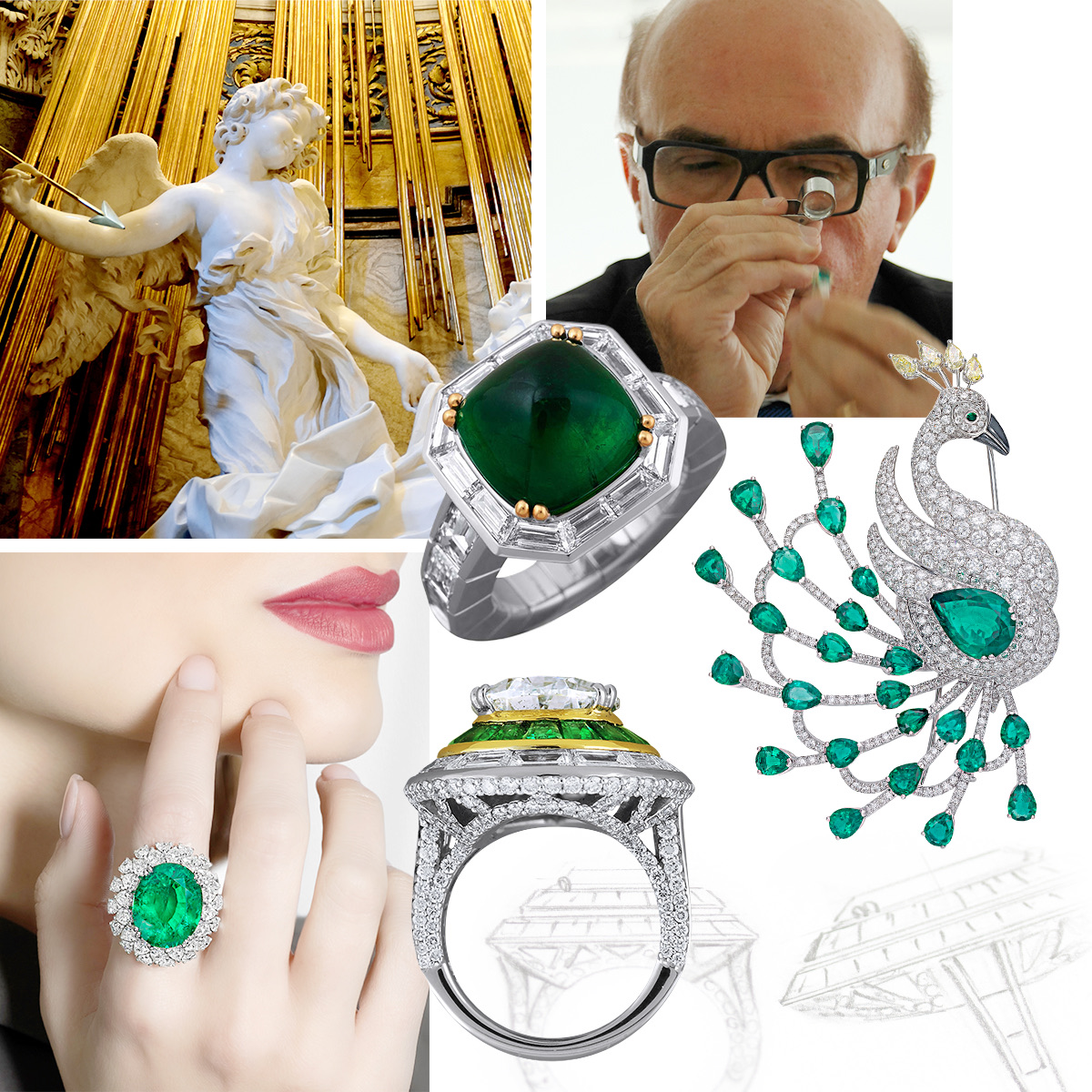
Clockwise from upper left – Santa Maria della Vittoria in Rome (Getty Images), Giuseppe Picchioti, PICCHIOTTI Peacock Masterpieces Emerald and Diamond brooch, PICCHIOTTI Masterpieces Emerald ring, model wearing PICCHIOTTI Masterpieces Emerald and Pear Diamond ring, PICCHIOTTI Xpandable Sugar Loaf Emerald cocktail ring
Italian jewelry is instantly recognizable because it reflects the country’s broader design philosophy. Italy has long influenced global architecture, fashion, furniture, automotive design, and industrial design. The same emphasis on elegance, proportion, and timeless beauty naturally applies to fine jewelry.
Designers like Giuseppe Picchiotti, founder of PICCHIOTTI, embrace an understated sophistication that appeals to collectors seeking classic refinement. Every handcrafted bracelet, necklace, ring, or pair of earrings embodies a tradition that values patience over speed and excellence over mass production. In an era increasingly defined by automation and fast fashion, Italian jewelry remains a celebration of human skill and timeless design.
Giuseppe muses, “Everywhere I look in my homeland, I see the pinnacles of achievement in architecture, design, cuisine, fine art, and fashion. I believe these cultural influences become a part of us and how we work and how we think and how we create the beautiful jewelry that we make.”
Italian jewelry continues to set the global standard; not simply because it is beautifully made, but because it represents a philosophy of luxury, a culture rooted in heritage, creativity, and beauty.
INNOVATION THAT ENDURES
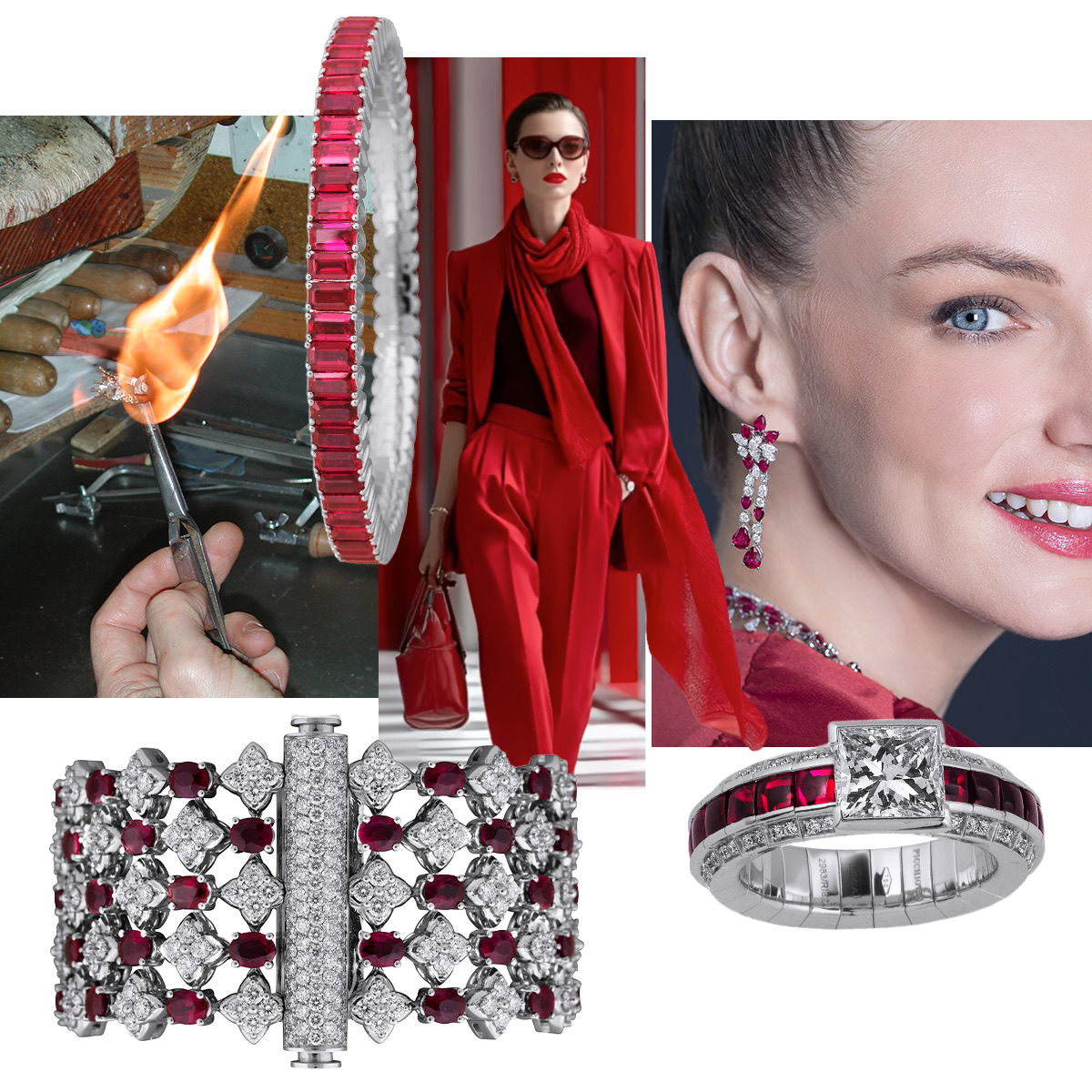
Clockwise from upper left – Craftsman at work in the PICCHIOTTI Atelier in Valenza, Italy, PICCHIOTTI Ruby Xpandable bracelet, Valentino red, model wearing PICCHIOTTI Masterpieces Ruby and Diamond earrings and necklace, PICCHIOTTI Xpandable Diamond and Ruby ring, PICCHIOTTI Ruby Lace Masterpieces necklace
Another reason that Italian jewelry is distinctive is that it combines artistic creativity with technical innovation to focus on comfort and durability. Not only can imaginative designers dream up beautiful new styles, but the manufacturers in Italy can figure out ways to make them. Italy leads the world in export sales of jewelry manufacturing equipment. The country is known for innovations like the creation of new alloys, new lightweight or hollow tubing (think hoop earrings, bangle bracelets), and flexible designs (such as tubogas or PICCHIOTTI’s Xpandable mechanism) – offering more and more comfortable ways to wear precious metal jewelry on a daily basis.
Another defining characteristic of Italian jewelry is longevity. As Italian designers continuously experiment with texture, movement, and form, they also ensure exceptional wearability and durability. Patent-worthy advancements such as PICCHIOTTI’s Xpandable™️ mechanism demonstrate the height of engineering, as well as aesthetics, ensuring both comfort and ease. The invisible expanding technology is durable enough to use with even the most superlative gemstones, and it is comfortable enough to wear every day. The result is jewelry that feels luxurious not only visually but also physically.
Unlike fashion accessories designed for a single season, Italian fine jewelry is intended to become an heirloom. Superior materials, expert construction, and timeless design allow many pieces to be worn, restored, and passed from one generation to the next.
The commitment to handcraftsmanship remains strong. While technology may occasionally enhance production, Italian jewelers continue to work at the bench, setting gemstones by hand, recutting the gemstones to fit perfectly, and polishing the finished pieces. The generations of family-owned fine jewelry houses have fostered a unique talent pool in present day Italy unlike anywhere else in the world; gifted experts, master artisans, true artists.
This long-term perspective contributes to the enduring appeal of Italian jewelry among collectors and luxury buyers alike.
Italian jewelry truly is some of the finest jewelry in the world. It offers more than precious materials—it tells a story of artistry, culture, and human expertise. Modern consumers are increasingly drawn to pieces with lasting significance rather than seasonal fashion, prioritizing authenticity, heritage, and craftsmanship over conspicuous consumption. These are the things that inspire emotional connection, and at the end of the day, fine jewelry is not just a product. It is an emotional experience of wearing and owning something distinctive, meaningful, and rare.
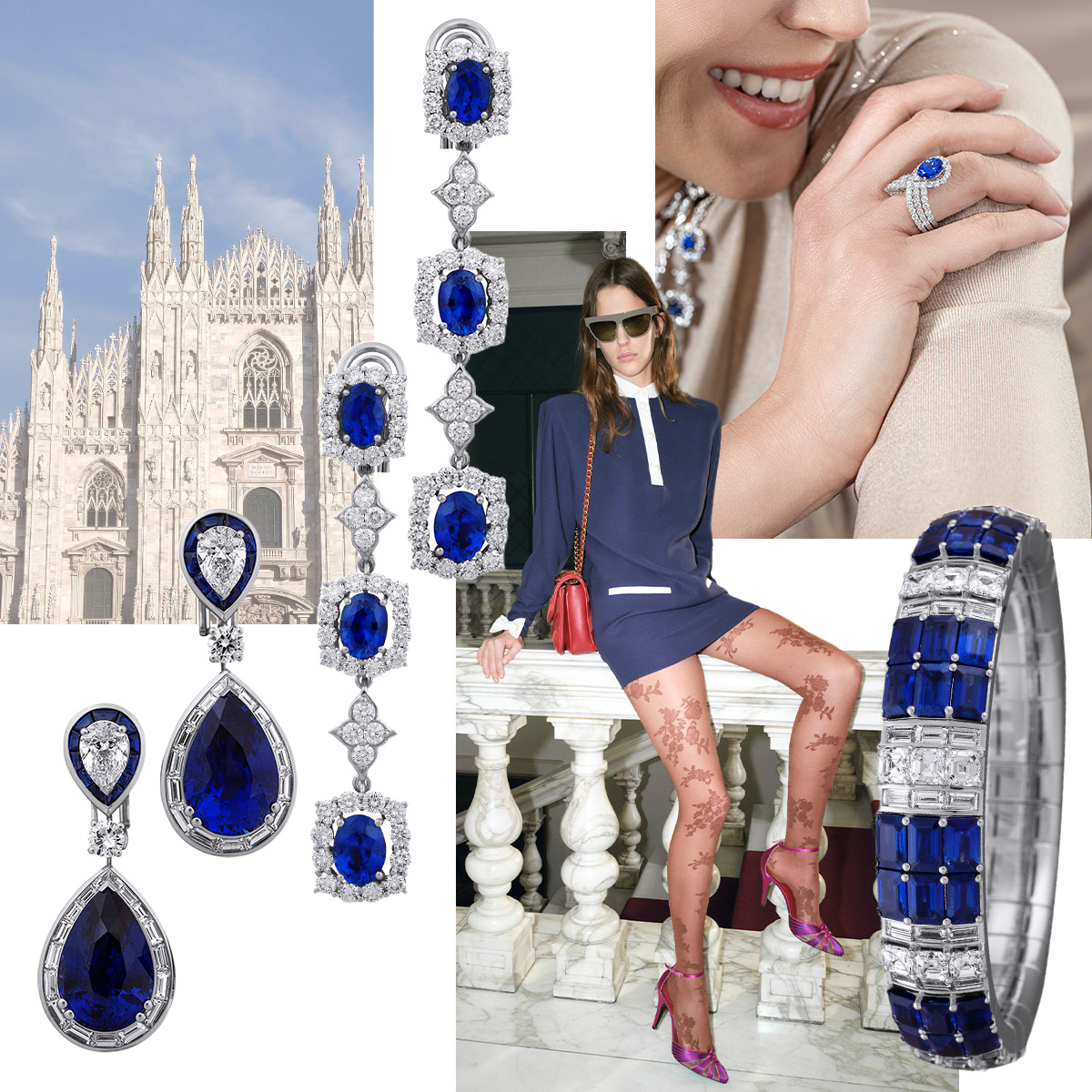
Feature image at top – clockwise from upper left – Milan Cathedral (Getty images), PICCHIOTTI Sapphire chandelier drop earrings, Valentino Pre Fall 2026 (Spotlight Launchmetrics),model wearing PICCHIOTTI chandelier Sapphire necklace and Sapphire cocktail ring, PICCHIOTTI Signature Style Xpandable Sapphire and Diamond bracelet, PICCHIOTTI Sapphire Masterpieces earrings
If you liked this, you might also like…
High Diamond Jewelry with Classic Italian Style
Italian Jewelry – A Heritage of Gold Craftsmanship in Valenza
At Home with PICCHIOTTI – Behind the Scenes at The Italian Heritage Brand’s Atelier
